Relief that reaches deeper than you thought possible
Craniosacral Therapy uses a light touch to free your nervous system from chronic tension, pain, and the weight of long-held stress.
Perhaps it's time you tried Craniosacral Therapy
CST is especially effective for people whose pain, tension, or stress hasn't fully responded to other approaches, or who are looking for something gentler that works with the body, not against it.
- ✓You're plagued with chronic headaches or migraines that just won't resolve
- ✓You've had a car accident or injury that left you with whiplash or concussion symptoms: brain fog, disorientation, eye pressure, fatigue
- ✓You're stressed out, anxious, or carrying the weight of emotional trauma in your body
- ✓You have sinus pressure, or jaw pain from clenching or grinding your teeth
- ✓You have chronic neck, back, or hip pain that keeps coming back no matter what you try
- ✓You're looking for something deeply relaxing that addresses root causes, not just symptoms
"Everything the body experiences is recorded in the tissue. CST helps the body shift what it's ready to change."
That's your parasympathetic nervous system getting a turn. Many clients describe leaving a session feeling more spacious and open than they have in years.
Book a SessionWhat is Craniosacral Therapy?
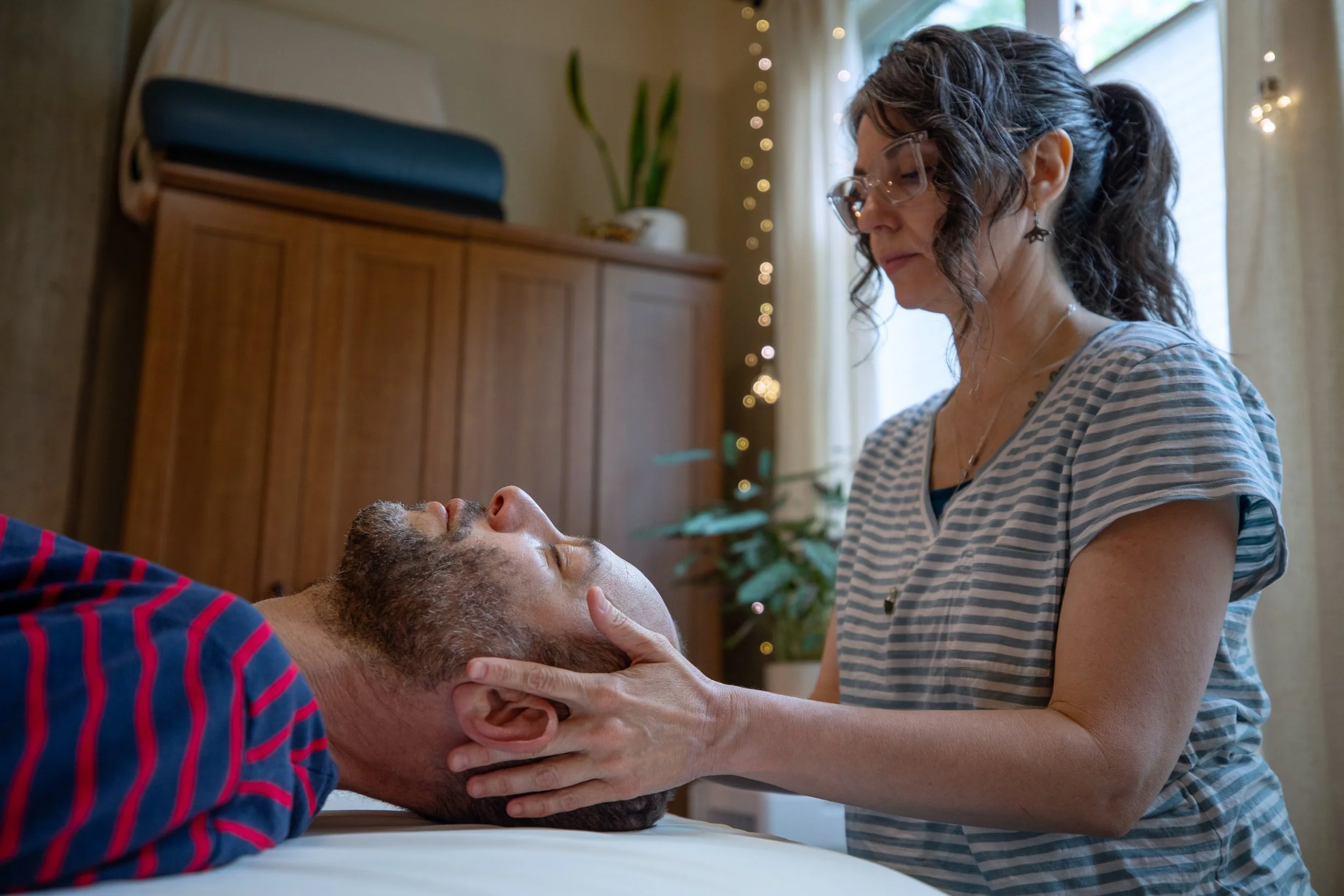
Most massage works with muscles. Craniosacral Therapy goes somewhere different, using light contact to manipulate the soft tissues, decompress bony structures, and free the membranes that surround and protect your brain and spinal cord. The goal is to enhance the flow of cerebrospinal fluid throughout your central nervous system.
When the membranes and connective tissues of the craniosacral system become restricted (from injury, accumulated stress, trauma, or simply years of daily life), cerebrospinal fluid can't circulate as freely as it should. CST works to release those restrictions. The forces used are exceedingly light, and although the focus is often at the head, sacrum, feet, and major joints, treatment can be applied anywhere on the body. The effects go deep.
How Craniosacral Therapy Works
A CST session is quiet and still from the outside. Underneath, I am attuning to the subtle rhythm of your craniosacral system, sensing where flow is restricted, and using gentle holds to invite release. The forces are light. The effects are not.
A Deep Nervous System Reset
CST shifts your nervous system out of "fight or flight" and into the parasympathetic state: the state in which your body actually heals, repairs, and restores itself. Clients often drift into a dream-like calm, sometimes accessing memories or emotions that surface spontaneously for release. This is a normal, and often welcome, part of the process.
Freedom from Chronic Tension
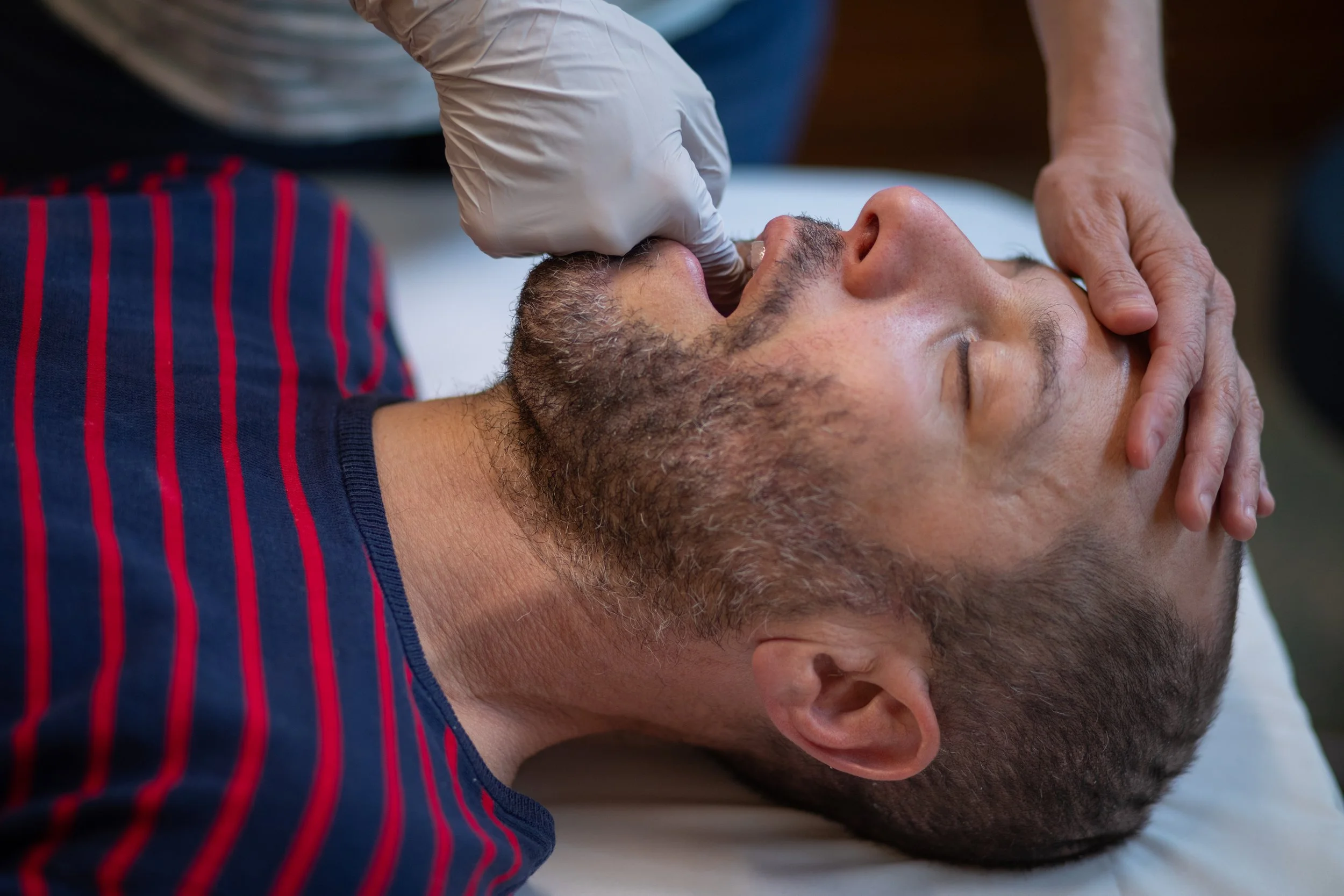
Gentle, sustained holds allow long-held fascial restrictions to soften and let go throughout the body. For jaw pain, sinus pressure, and neck tension, intraoral work reaches places no other technique can access, often producing immediate results clients describe as unlike anything they've experienced before.
Restored Cerebrospinal Flow
By freeing strained and compressed tissues, CST improves the circulation of cerebrospinal fluid, enhancing nerve conductivity, nourishing and cleansing the nervous system, and giving your body's own healing processes the resources they need to do their best work.
CST can help with…
These are some of the most common reasons clients seek out Craniosacral Therapy. If you don't see your concern listed, reach out. CST's applications are remarkably broad.
What clients say
"Cranial sacral work is subtle but for me, it has achieved success where years of physical therapy and massage have not. And the bonus is that I'm learning more about my body as Jennifer explains what she's doing and how my body is responding. I wish more people knew about this incredible form of therapy and took advantage of Jennifer's skill and knowledge!."- EF
"Jennifer has been a critical partner in my recovery from Leukemia. I cannot begin to say enough positive things abour her practice and the healing I have felt as a result of her work. I am astounded by her ability to listen to the body's rhythms and energies and address those through the various modalities she uses. Her work is so powerful and holistic that it is no exaggeration to say that she also plays an important role in my overall well being- CF
"Jennifer is a excellent practitioner. I've been receiving craniosacral sessions from her for the last few years. Every session I feel more centered and at ease, my sinuses feel clearer and my head feels lighter. She is able to address my concerns in a really comfortable and relaxing way that has helped resolve some long standing problems I've been living with."- HL
Before you book
How is CST different from regular massage?
Where traditional massage works primarily with muscles, Craniosacral Therapy uses an extremely light touch to work with the bones, membranes, and fluids of the craniosacral system. Rather than manipulating tissue directly, a CST practitioner listens for subtle rhythm and movement, sensing restrictions and gently encouraging the system back toward balance. The work is quiet but profound.
What does a session feel like?
Clients often describe feeling profoundly relaxed, leaving feeling more spacious, open, and at ease. Long-held emotions or memories occasionally surface as tension releases. This is a completely normal and often welcome part of the healing process.
What is intraoral work?
For TMJ disorders, jaw pain, and chronic neck tension, we can work inside the mouth to release tension held deep in the jaw's muscles and connective tissue. Intraoral work is tremendously effective and often produces immediate, noticeable relief. However, it is not a required component of a craniosacral session.
Is CST appropriate for everyone?
Craniosacral Therapy is extremely gentle and appropriate for most people, from infants to the elderly. If you have specific health concerns, reach out before booking and we'll talk through whether CST is the right fit for you.
How many sessions will I need?
This depends on what your body is ready to release. Some clients feel stabilized after just a few sessions, others make CST a part of their monthly self-care.
What should I wear?
CST is done with the client fully clothed, so comfortable, loose clothing is ideal. Please no jeans, or thick, tight waistbands.
Your nervous system is ready to settle.
Craniosacral Therapy is one of the gentlest, most profoundly effective approaches to chronic pain, stress, and nervous system overwhelm. Many clients feel deep shifts after just one session.